Kalodata alternative: the honest options for solo TikTok Shop sellers
A Kalodata alternative is any way to watch rival listings without relying on Seller Center. This post compares the portals, the spreadsheet, and the push model that alerts you.
Published · 5 min read
In this post7 sections
- What are the Kalodata alternatives, honestly?
- What does each tool show when the data is thin?
- Portal or push: which one does the work for you?
- Is the free alternative just a spreadsheet?
- What do sellers ask?
- What are the Kalodata alternatives?
- What does SoldCount do that the portals do not?
- How much do the Kalodata alternatives cost?
- Can I use it without a seller login?
- Which Kalodata alternative fits a solo seller?
- What is the one step?
- Questions

In short
A Kalodata alternative can be another portal, a spreadsheet, or a push model that alerts you when a watched rival listing moves. SoldCount shows the numbers on the listing page, sends alerts with the figures behind them, and says 'not enough history yet' when the history is thin. It is free to start, with no card and no billing in the app today.
You still find out about a rival undercutting you only after your own sales dip, and a Kalodata alternative is one way to stop that. Most of the paid options are portals you log into and check. The honest question is what each tool shows when the data is thin, and whether the number comes to you or you go to it. SoldCount is the push model that answers that question for a solo shop.
EchoTik says most sellers notice competitor moves too late. That is the cost of not knowing.
What are the Kalodata alternatives, honestly?
Kalodata, FastMoss, and Shoplus are the paid portals a solo seller usually compares.
The free spreadsheet is a place you keep the numbers yourself. DAMI describes tracking rivals in a simple spreadsheet for 30 days.
The push model is the one that brings the number to you. It watches the rival listings you care about and alerts you when one moves. That is the model this post is about. You can see the whole model on the /platform page.
Figure 1 compares the two models on a first day. The portal side is what any single visit to the public listing page can show. It is not a screenshot of a named portal.
What does each tool show when the data is thin?
The warning this post can source is that an estimate can differ from actual transactions. Dashboardly reported in November 2025 that Kalodata says in its public description that its estimates can differ from actual transactions. That warning matters. An estimate without a reason can hide a weak number.
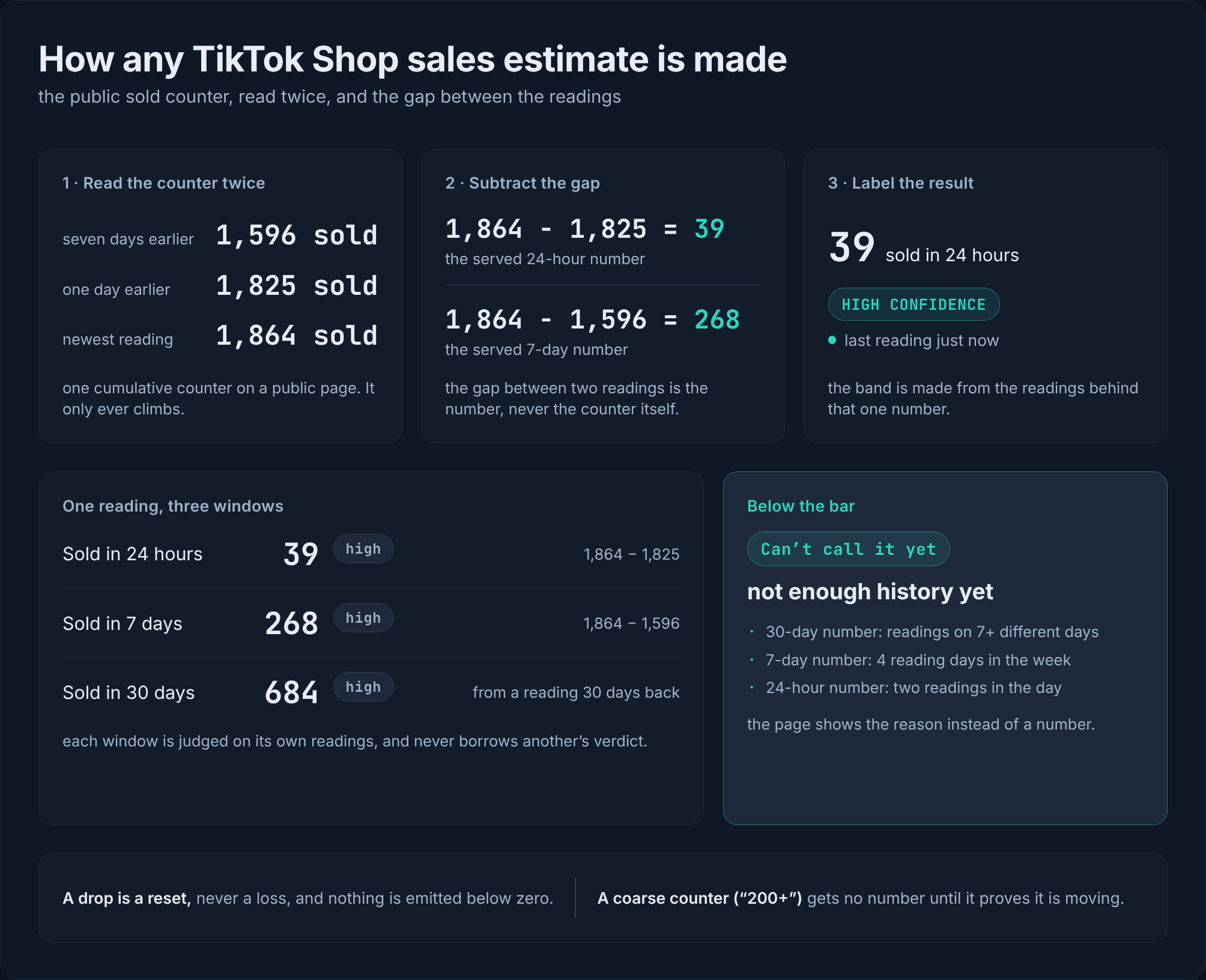
SoldCount shows no number when the history is fewer than about 7 days. The pill says "not enough history yet". The line says "not enough history yet". That is the honest move. It means the tool does not guess. The method is explained in Is Kalodata accurate, and the full method is on methodology.
Portal or push: which one does the work for you?
The portals are a place you log into and go check. They charge a monthly seat, often $38 to $199, and they use daily search quotas. Apify says analytics tools like Kalodata, FastMoss, and Shoplus charge $60 to $200 a month for a fixed interface built on scraped TikTok Shop data. Apify also says TikTok's official API helps sellers manage their own shops only, so it gives nothing on competitors. A seller in the Reddit thread said, "Kalodata is so overpriced," and added that the extra seat on the plan had no use for them.
Seller Center shows your own shop only. That is why the push model starts from the public listing page. It takes the public numbers TikTok already embeds in every listing page: price, options, and the "sold since listing" counter. It re-checks about every 6 hours, so change is measured, not guessed.
It shows how fast a listing is selling. It shows when a listing is selling faster or selling slower. It shows where its price sits in the price range for similar listings, from the cheapest 10% to the priciest 10%. It shows which way it is going, vs last week, with a 30-day chart. Every number carries a note about how sure it is and how old it is.
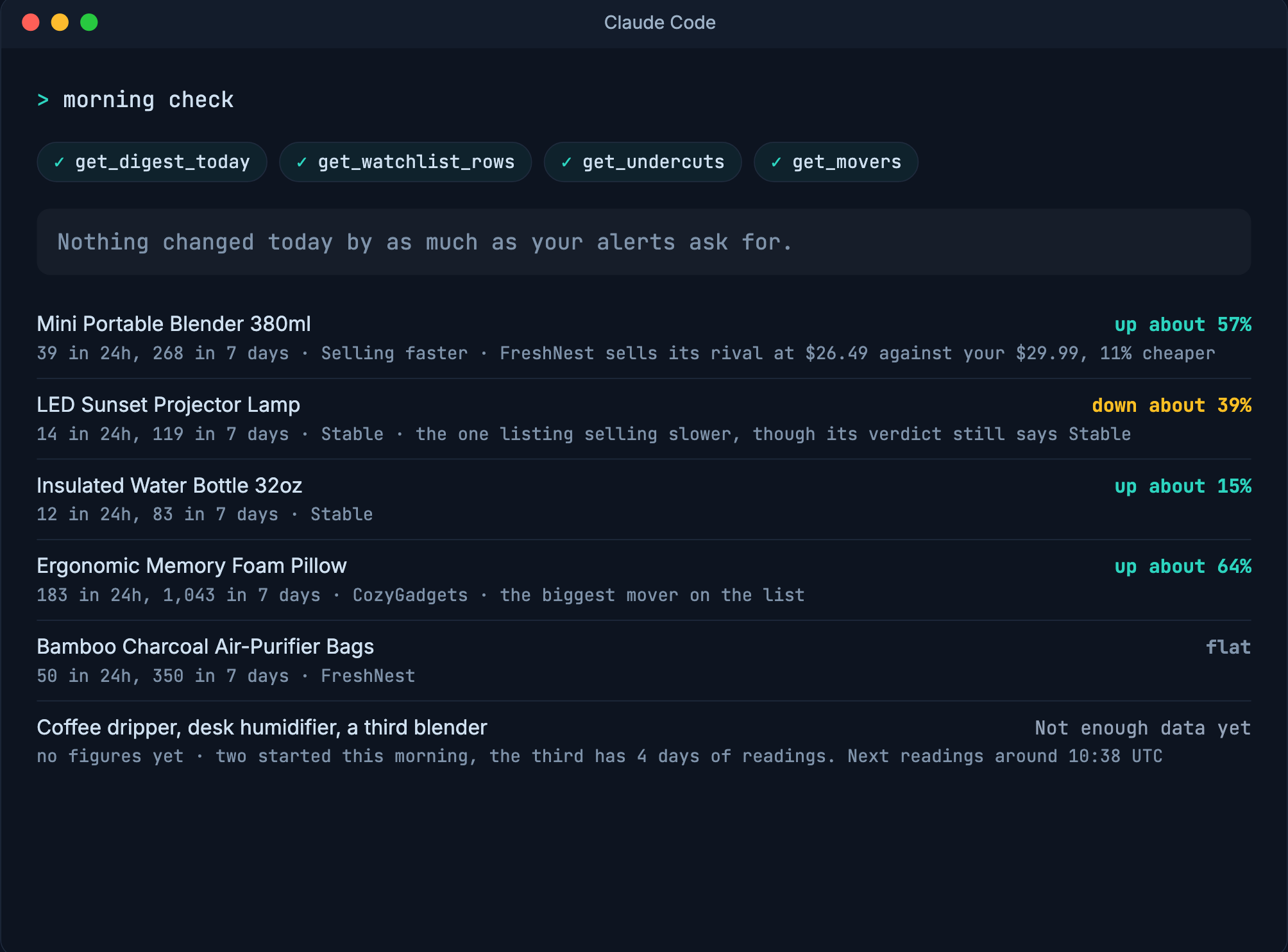
The number also comes to you. It shows on the listing page itself through the overlay. It also sits inside your AI assistant, so you can ask Claude about the numbers behind a listing. See the watch and alert route.
When a watched listing moves, every alert ships with the receipts: the exact figures behind the call. It can alert you on a price cut, a jump in sales, or a move to out of stock.
Each alert shows the figures behind the call, not just a label.
Is the free alternative just a spreadsheet?
Yes, for some jobs. DAMI says a simple spreadsheet can show patterns over 30 days. That is real. The spreadsheet never alerts you. You open it, look, and then close it. If you only want the raw data for your own research, a dashboard subscription is overkill. lmslay on dev.to says the same.
What do sellers ask?
What are the Kalodata alternatives?
The main options are the other TikTok Shop portals, a free spreadsheet, and a push model that alerts you when a rival listing moves.
What does SoldCount do that the portals do not?
It comes to you when a watched listing changes, and it says "not enough history yet" when the history is too thin.
How much do the Kalodata alternatives cost?
The portals are paid monthly, often $38 to $199 per seat, with daily search quotas. The spreadsheet is free. SoldCount is free to start, with no card and no billing in the app today.
Can I use it without a seller login?
Yes. It only uses public pages, never a seller login, and never writes to the shop. It works on a competitor's listing and your own.
Which Kalodata alternative fits a solo seller?
If you need to catch a specific rival move quickly, the push model fits because it alerts you on the listing and in the AI assistant. A paid portal fits if you want to check the numbers yourself.
What is the one step?
SoldCount exists so a rival's move comes to you before your sales dip. Open any competitor's TikTok Shop listing and add it to a free watchlist. It is one click on a page you already visit. That step needs no card, no seller login, and changes nothing in your shop.
Questions
- What are the Kalodata alternatives?
- The main options are the other TikTok Shop portals, a free spreadsheet, and a push model that alerts you when a rival listing moves.
- What does SoldCount do that the portals do not?
- It comes to you when a watched listing changes, and it says 'not enough history yet' when the history is too thin.
- How much do the Kalodata alternatives cost?
- The portals are paid monthly, often $38 to $199 per seat, with daily search quotas. The spreadsheet is free. SoldCount is free to start, with no card and no billing in the app today.
- Can I use it without a seller login?
- Yes. It only uses public pages, never a seller login, and never writes to the shop. It works on a competitor's listing and your own.
- Which Kalodata alternative fits a solo seller?
- If you need to catch a specific rival move quickly, the push model fits because it alerts you on the listing and in the AI assistant. A paid portal fits if you want to check the numbers yourself.